


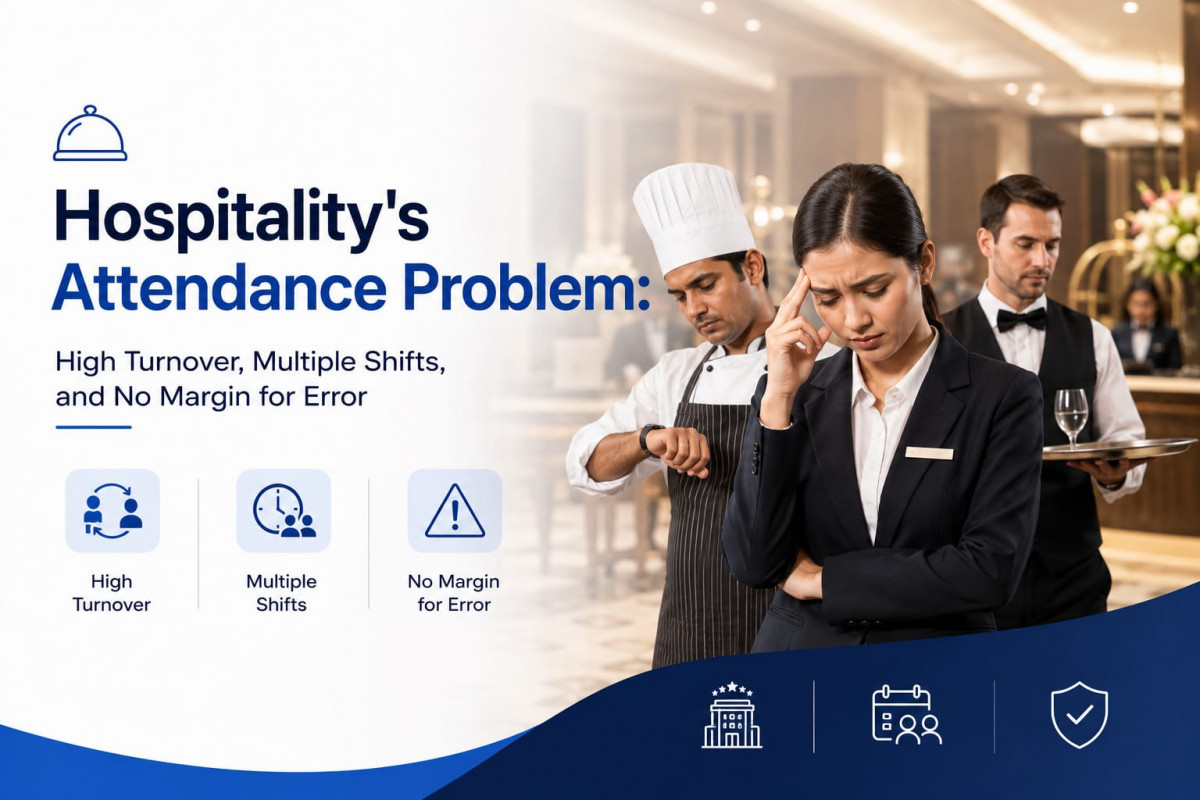
Few industries combine constant staff turnover, round-the-clock shifts, and zero tolerance for service gaps quite like hospitality. Attendance isn't a back-office formality here it's operational survival.
Walk into any hotel, resort, or large restaurant group and ask the operations manager what keeps them up at night. Rarely is it the guest experience itself that part, teams are trained for. It's whether there will be enough housekeeping staff on the morning shift, whether the night-audit desk is covered, and whether the kitchen brigade scheduled for the weekend banquet actually shows up. In hospitality, attendance isn't administrative overhead. It's the difference between a smooth operation and a guest-facing failure.
Why Hospitality Is Structurally Harder Than Other Industries
Most industries deal with one or two of these challenges. Hospitality deals with all of them at once.
Extremely high turnover. Hospitality consistently ranks among the highest-turnover sectors globally, with entry-level and seasonal roles often seeing staff cycle through in months, not years. Every new hire means another onboarding cycle for attendance systems, ID badges, or access credentials a constant administrative drag that many properties simply don't have the staffing bandwidth to keep up with properly.
Round-the-clock, overlapping shifts. Hotels don't close. Front desk, housekeeping, kitchen, security, and maintenance all run on different, often overlapping shift patterns early morning, day, evening, night audit sometimes with the same employee covering irregular hours across different departments during peak season.
Seasonal and event-driven staffing spikes. A resort during wedding season, a banquet hall during festival months, or a hotel during a major conference will bring in temporary and contract staff rapidly, often for just days or weeks creating short bursts of high headcount that permanent systems weren't necessarily built to onboard quickly.
Zero tolerance for understaffing. Unlike a back-office function where a staffing gap might just mean a delayed report, an understaffed housekeeping shift or an empty front desk directly and immediately affects the guest experience often in ways that show up in reviews within hours.
Where Manual and Legacy Systems Fail Hospitality Specifically
Buddy punching becomes almost invisible amid shift chaos. With so many overlapping shifts and rotating staff, it's genuinely difficult for a manager to notice when one employee has clocked in for a colleague especially during high-turnover periods when managers themselves are still learning who's who.
Manual scheduling can't keep pace with last-minute changes. A sick call at 6 AM for the breakfast shift, a no-show banquet server an hour before a wedding hospitality runs on real-time adjustments that spreadsheet-based rosters and paper registers simply can't reflect fast enough.
Payroll complexity multiplies with split shifts and overtime. Many hospitality roles involve split shifts (a few hours in the morning, a break, then evening service) or irregular overtime during events. Manual attendance tracking makes accurate payroll calculation for these patterns genuinely difficult, leading to disputes and compliance risk.
Temporary and contract staff often bypass formal tracking entirely. Event staff or seasonal hires brought on for a few days are frequently tracked informally a checklist on a clipboard, a verbal headcount because formally onboarding them into the attendance system feels like too much overhead for such a short engagement. This creates payroll and security gaps precisely during the busiest, highest-risk periods.
What Hospitality Actually Needs From an Attendance System
Given these structural pressures, the requirements for hospitality attendance look different from a typical office environment:
- Fast onboarding for short-term and seasonal staff — a system that can add and remove people in minutes, not days, without heavy IT involvement.
- Real-time visibility across departments and shifts — so a manager can see, at a glance, who's actually on the floor right now versus who was scheduled.
- Accurate tracking of split shifts and irregular hours — precise enough that payroll doesn't become a monthly reconciliation headache.
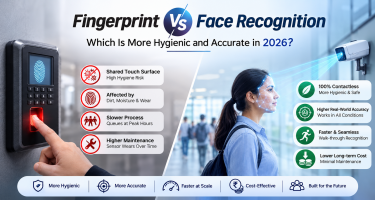
- Contactless, fast check-in — during a rushed shift changeover, a queue at a fingerprint scanner is friction the operation can't afford; face recognition walkthrough entry fits the pace of hospitality far better.
- Multi-property visibility for hotel groups and chains — centralized reporting across locations, rather than each property managing attendance in isolation.
The Business Case Is Immediate, Not Theoretical
In many industries, the cost of attendance inaccuracy is a slow leak that takes a while to notice. In hospitality, it's often immediate and visible: a short-staffed shift shows up in guest complaints the same day, a payroll error shows up in a disgruntled employee the same pay cycle, and an unrecorded contractor shows up as a security gap the moment something goes wrong.
This is precisely why hospitality operators who get attendance right treat it as an operational priority, not an HR afterthought because in an industry with no margin for error, the attendance system isn't just tracking who showed up. It's protecting the guest experience itself, shift by shift, every single day.
Hospitality doesn't get a second chance at a shift that went wrong. Getting attendance right the first time isn't a nice-to-have here it's part of running the operation at all.

Comments
Loading comments...